Pier Paolo Pasolini: A Painter at Heart Who Challenges the Status Quo
Pier Paolo Pasolini is not primarily known as a painter, but his aesthetic sensibility also touched the field of visual arts. His artistic vision was profoundly interdisciplinary, and although painting was not his primary medium, the visual impact of his films, his image-rich poetry, and his evocative theater reveal a profound understanding of pictorial qualities such as composition, color, and form.
In the current art scene, Pasolini’s influence is evident in the way contemporary artists address social, political, and existential issues. Being a “painter” in Pasolini’s sense can mean adopting an approach that goes beyond simply painting pictures, but also contemplates reality with a critical eye and creates works that challenge the status quo.
Contemporary artists, influenced by Pasolini, tend to explore issues of marginality, diversity, and alienation, emphasizing art’s ability to reveal uncomfortable truths and act as a catalyst for social change. Their work often embodies a dialogue between past and present, as did Pasolini with his profound interest in cultural roots and their evolution or destruction in the modern context.
Pasolini the “painter” thus lives on in the inspiration of those who see art as a means of investigating the human condition, of creating a link between life and art, and of keeping alive the imagination’s capacity to imagine different worlds. His legacy invites artists to be chroniclers of reality and prophets of unexplored possibilities, just as he did through his multiple artistic talents.
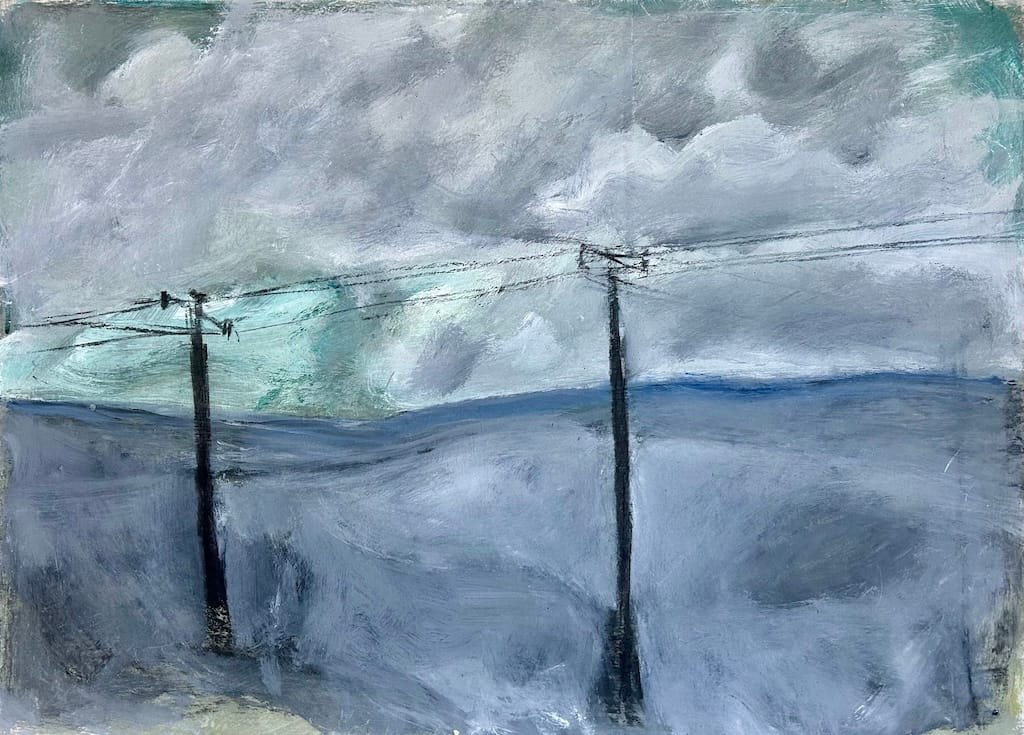
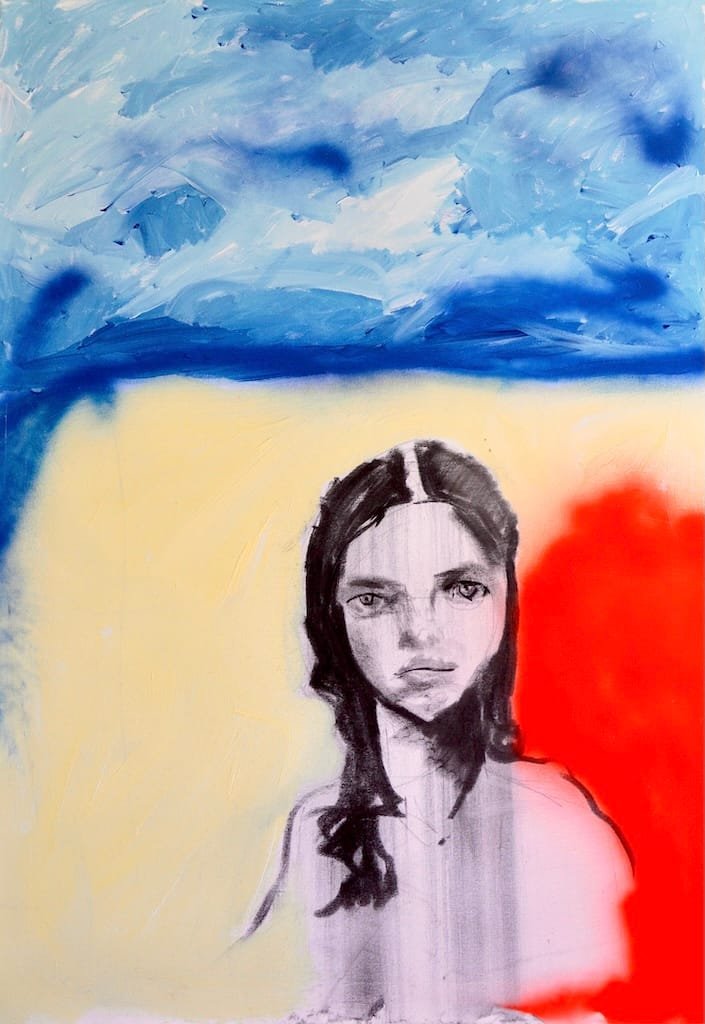
This painting of mine, with its canvas of soft hues and essential lines, is a tribute to Pier Paolo Pasolini. The lines of the lampposts, emerging from the haze of earthy colors, can be interpreted as a symbol of Pasolini’s attempt to find order in the chaos of modern society, a constant search for meaning through the fog of convention. The tumultuous sky, which occupies a large portion of the composition, reflects the emotional intensity and complexity of the themes Pasolini addressed in his films and writings, while the field of nuanced colors represents the vastness of the cultural landscape he explored. There is a cinematic quality to this work that echoes Pasolini’s visual mastery, making the painting a pictorial dialogue with his critical and visionary spirit.
Pasolini and the pictorial gesture: beyond the painting
Although Pasolini didn’t define himself as a painter in the traditional sense, his “pictorial gesture” was constant: a way of observing the world that transformed every everyday scene into an aesthetic fragment.
His cinema is made of shots that resemble Renaissance paintings wounded by reality, of faces that emerge as icons both sacred and profane.
This visual dimension makes Pasolini a total artist, capable of using light as pigment and reality as canvas.
Pasolini’s visual legacy in contemporary art
Many contemporary artists find Pasolini a point of reference, especially for his way of uniting denunciation and poetry, flesh and spirit, truth and vision.
His works continue to influence painters, photographers, and videographers who explore marginality, the transformation of urban landscapes, and fluid identity.
His ability to see beauty in the interstices of society is more relevant today than ever: an invitation to look at what is “off-scene,” what the dominant culture often avoids showing.
The painting as a dialogue with Pier Paolo Pasolini
The pictorial work described in the article is not just a tribute: it is a dialogue, a bridge between languages.
The lampposts piercing the fog become a metaphor for Pasolini’s tension between order and disorder, between search and loss.
The choppy sky recalls his poetic restlessness, while the hazy earth seems to guard the fragments of the world Pasolini wanted to save: faces, stories, places that risk disappearing under the pressure of standardization.
This painting doesn’t represent Pasolini: it evokes him, allowing him to emerge as an echo, a subtle yet luminous presence.
And this is precisely the strength of the contemporary artist: transforming an absence into a living image.